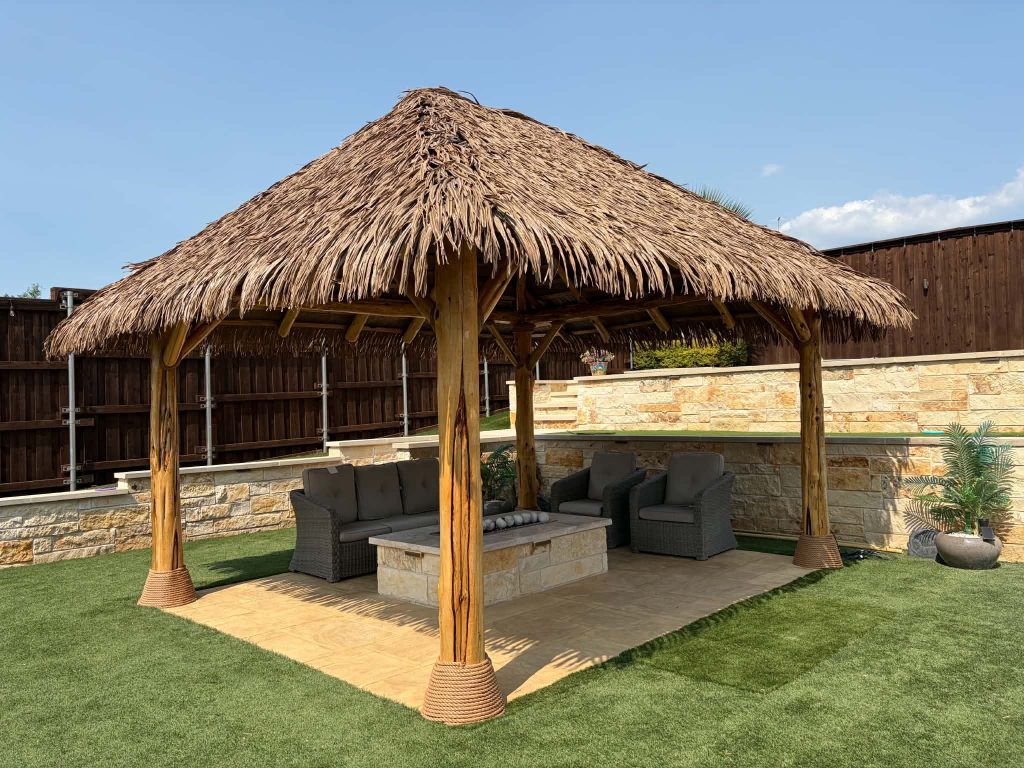
If you have been searching for shade ideas, you may have run into the term “thatched ramada” and wondered how it differs from a palapa or a regular patio cover. The short answer is that they are close cousins. This guide walks through what a thatched ramada is, what it is made of, what affects the cost, how it holds up in Texas weather, and how to pick the right one for your yard.
What is a thatched ramada?
A ramada is an open shade structure with a roof held up by posts and no walls. The word has deep roots in the Southwest, where ramadas have been used for generations to create shade over outdoor living and working spaces. A thatched ramada is simply a ramada with a roof made of natural thatch, most often dried palm leaves, instead of wood slats, metal, or shingles.
The result is a shaded spot that feels relaxed and natural. Air moves freely under it, the thatch blocks direct sun, and the look fits right in next to a pool, an outdoor kitchen, or a quiet corner of the yard.
Thatched ramada vs. palapa
People use these two terms almost interchangeably, and in everyday conversation that is fine. Here is how they usually differ:
- Palapa comes from Mexican tradition and usually refers to a structure with a palm thatch roof, often with a peaked or round shape and a center pole or a set of posts.
- Ramada describes the open, post-and-roof form itself. It can have any kind of roof.
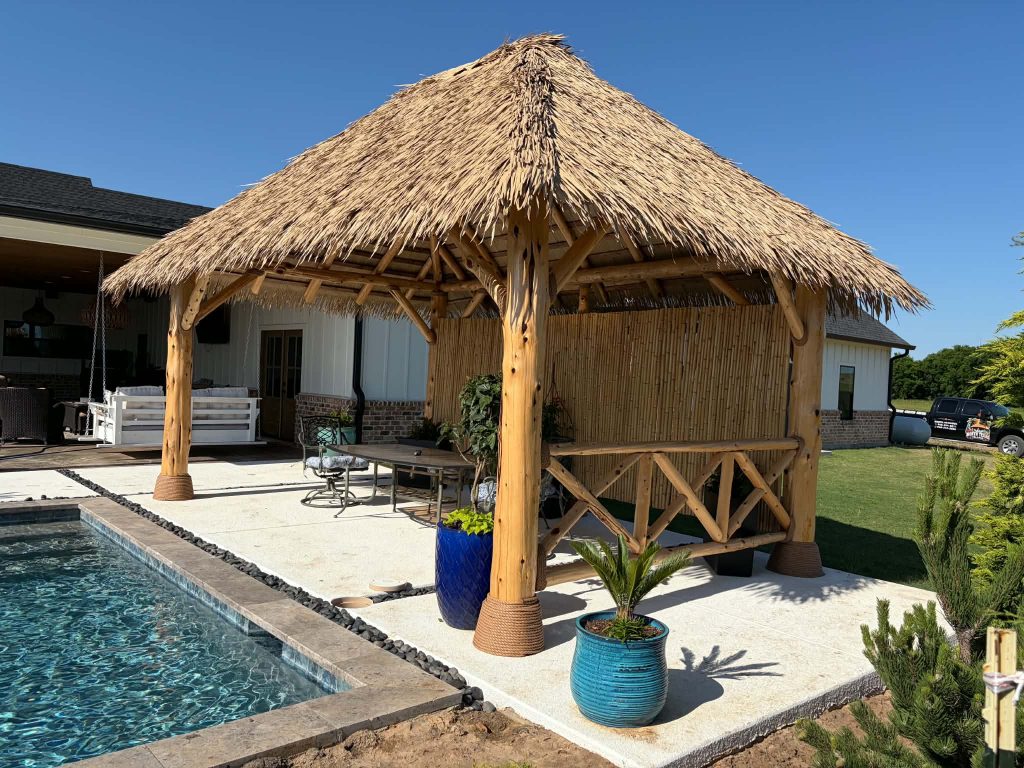
- Thatched ramada sits right in the middle: the open ramada form with a palm thatch roof, which is why many people use it as another name for a palapa.
In practice, a thatched ramada is often rectangular or square, which makes it easy to fit over a dining table, a seating area, or an outdoor kitchen. A palapa is more often thought of as round or hexagonal. Both can be built in either shape, so the label matters less than the design that fits your space.
If you are also weighing open-slat options, our post on palapa vs. pergola breaks down how a thatch roof compares with a pergola.
What a thatched ramada is made of
The frame
The frame is what carries the roof and holds up to wind. It is typically built from wood posts and beams, sized and anchored for the span of the roof. A solid frame and proper footings matter more than anything else for how long the structure lasts.
The thatch roof
The roof is where a thatched ramada gets its character. Palm thatch is layered in overlapping rows so that rain runs down and off the outside rather than soaking through. Thick, well-layered thatch gives better shade and sheds water better than a thin layer.
There are natural palm thatch options and synthetic thatch options. Natural thatch has an authentic look and texture. Synthetic thatch is made to resemble palm leaves and is often chosen by people who want a different maintenance routine or need to meet a specific requirement. Each has trade-offs, and a good builder will talk through both with you.
Extras
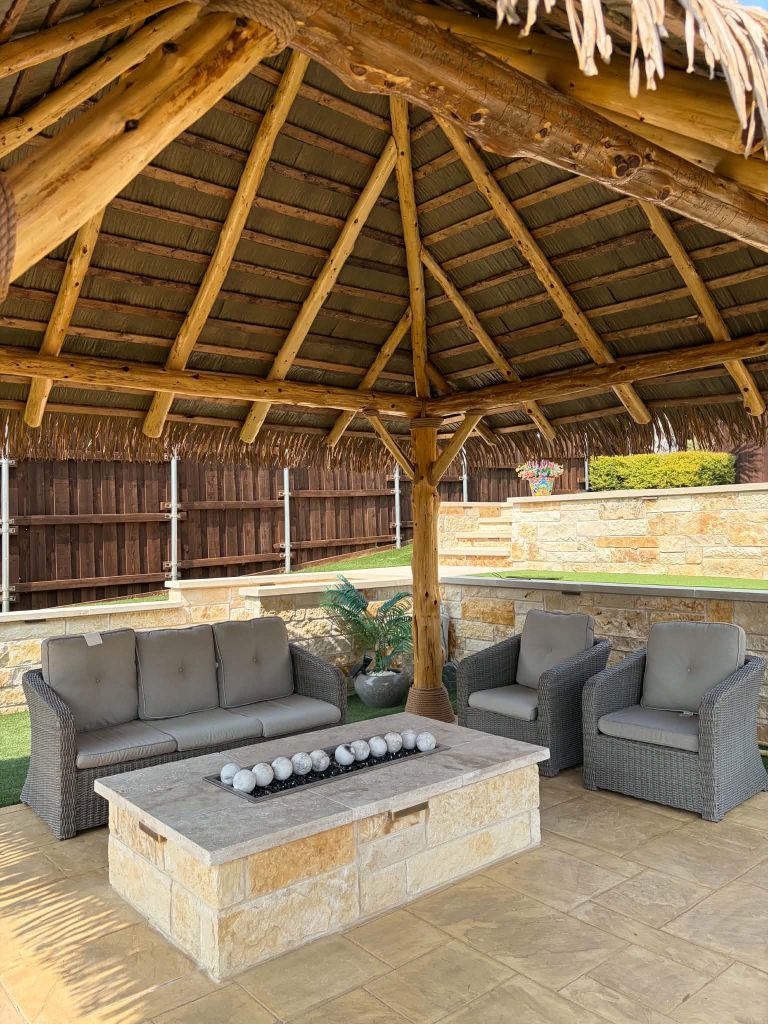
Many homeowners add features under the roof, such as ceiling fans, lighting, a bar counter, or an outdoor kitchen. These are worth planning from the start so wiring and supports can be built in cleanly.
What affects the cost of a thatched ramada
Every project is different, so we would rather give you a real quote than a made-up average. These are the main things that move the price up or down:
- Size and shape. A larger footprint means more framing, more thatch, and more labor. Simple rectangles are usually more straightforward than complex roof shapes.
- Thatch type and thickness. Natural vs. synthetic, and how many layers you want, both affect material cost.
- Frame materials. The type and size of wood, and any special finishes, play a role.
- Site conditions. Slopes, access for materials, existing patios, and the soil where footings go can all change the work involved.
- Add-ons. Fans, lights, electrical runs, bar tops, and kitchen features add to the scope.
- Permits and HOA requirements. Some cities and neighborhoods have rules about structures, setbacks, or materials. Planning for these early keeps surprises out of the budget.
The best way to know your number is a site visit and a quote based on your yard and your goals.
How a thatched ramada holds up in Texas weather
North Texas weather is tough on outdoor structures. Summers are hot and bright, storms can roll in fast with wind and hail, humidity comes and goes, and we get the occasional hard freeze. A thatched ramada can handle this well when it is built right and looked after.
A few things make the biggest difference:
- Good drainage. Thatch that dries out quickly after rain lasts longer. Water should run off the roof and away from the posts.
- Keeping sprinklers off the roof. Regular soaking from irrigation is one of the easiest problems to avoid.
- Clearing debris. Leaves and twigs that pile up on top hold moisture. Clearing them now and then helps.
- Seasonal checkups. A quick walk-around after storms and at the change of seasons helps you catch loose or thin spots early.
Over time, natural thatch will need touch-ups, and eventually a re-thatch. How long that takes depends on the thatch, the weather your yard sees, and how well it is cared for. For a season-by-season routine, see our guide on keeping palm thatch looking great through Texas seasons.
How to choose the right thatched ramada
Start with how you will use it
Think about what happens under the roof. A spot for a dining table needs a different size than a shaded lounge by the pool or a cover for an outdoor kitchen. Picture the furniture and the number of people you want to fit, then leave room to walk around.
Look at sun angles
Where the sun sits in the afternoon matters a lot in Texas. A ramada placed to block late-day sun over your main seating area will get used far more than one that looks nice but leaves you squinting at 5 pm.
Match the style of your home
A thatched ramada can lean rustic, tropical, or clean and modern depending on the frame finish, roof shape, and what you put under it. Aim for something that feels like it belongs with your house and landscape.
Check the rules early
If you live in an HOA neighborhood or a city with specific building rules, check what is allowed before you lock in a design. Your builder can help you understand what information you may need to gather.
Choose an experienced builder
Thatch work is a craft. Ask to see past projects, ask how they handle framing and footings, and ask how they layer the thatch. You can browse our portfolio to see the kinds of structures we build.
Get a free quote for your thatched ramada
North Texas Palapas builds custom palapas, thatched ramadas, pergolas, and tiki bars across the DFW area. If you are ready to add real shade and a relaxed, resort feel to your backyard, we would love to help you plan it.
Request a free quote or call us at 940-594-8211 to talk through your space and ideas.