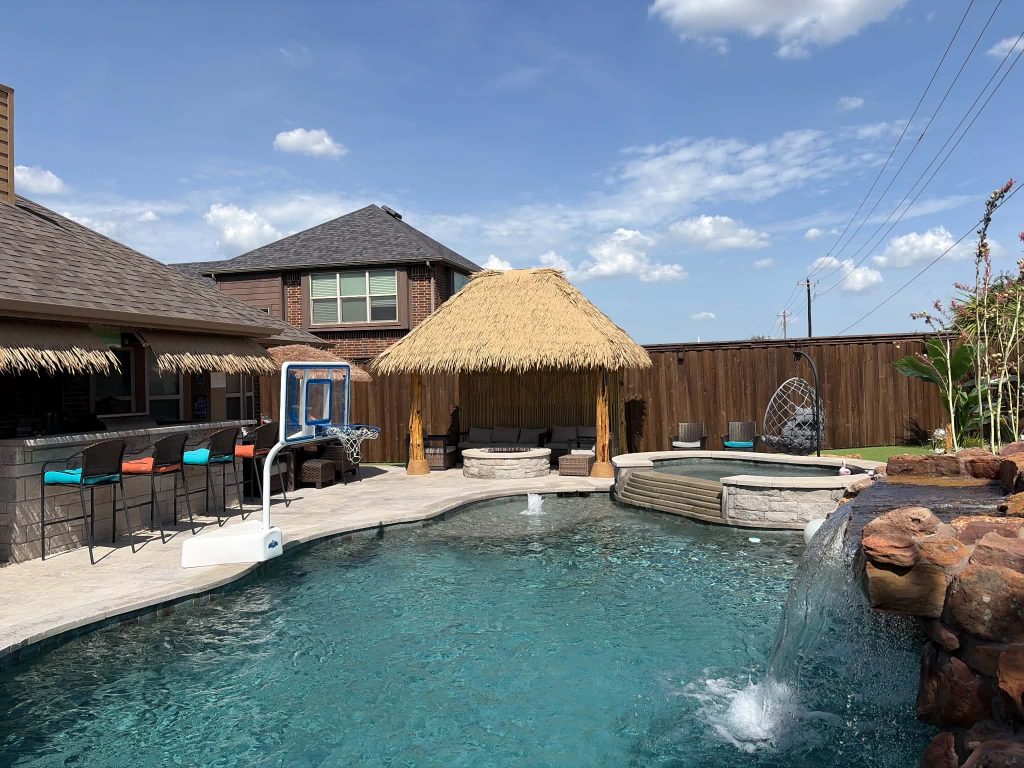
A backyard tiki bar can turn an ordinary patio into the spot where friends and family want to spend their weekends. Getting there starts with picking the right builder. This guide covers what to look for in a tiki bar builder in Texas, the design options worth thinking about, and the general permit and HOA questions to sort out before you build.
Why the builder matters so much
A tiki bar looks simple, but it is a real structure. It has to carry a heavy roof, stand up to North Texas wind and storms, and stay comfortable in the summer heat. It also needs to work well as a bar, with counter heights, storage, and room to move that make sense for how you entertain.
A builder who understands framing, thatch work, and outdoor living design will give you a tiki bar that looks great on day one and keeps working for years. A builder who treats it like a quick add-on may leave you with a roof that leaks, posts that shift, or a layout that never quite feels right.
What to look for in a tiki bar builder in Texas
Real experience with thatch
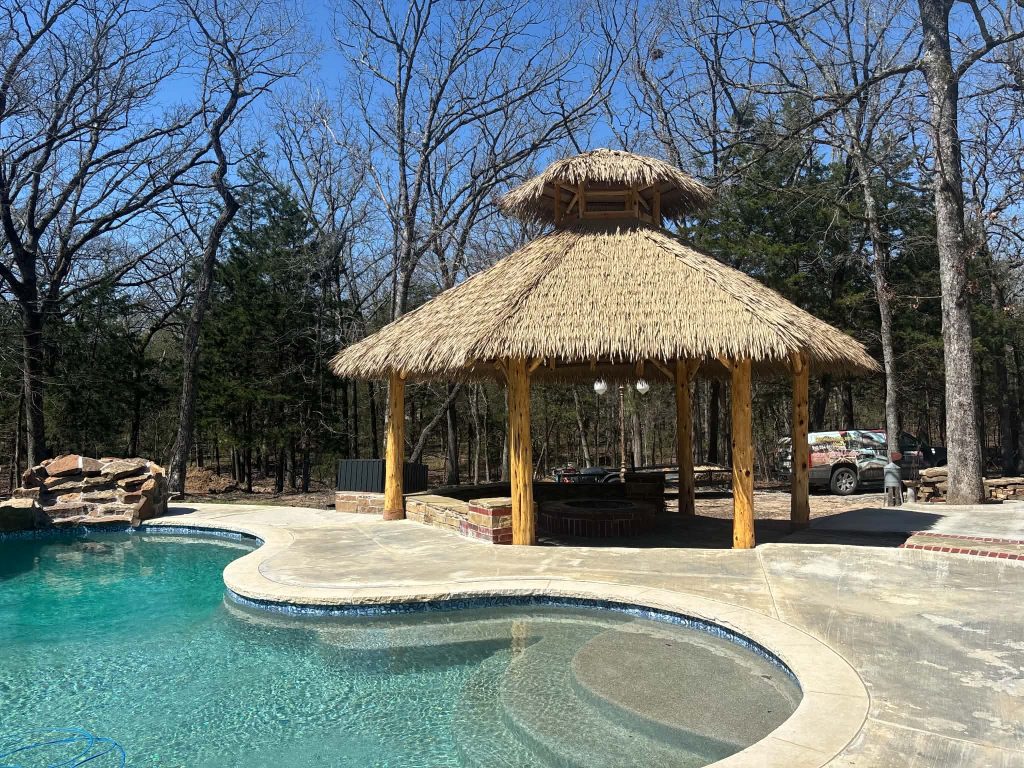
Palm thatch is what gives a tiki bar its look, and laying it well is a skill. Ask how the builder layers the thatch, how thick they make the roof, and how they handle the peak and edges where leaks tend to start. Ask whether they work with natural thatch, synthetic thatch, or both, and what they recommend for your situation.
Solid framing and footings
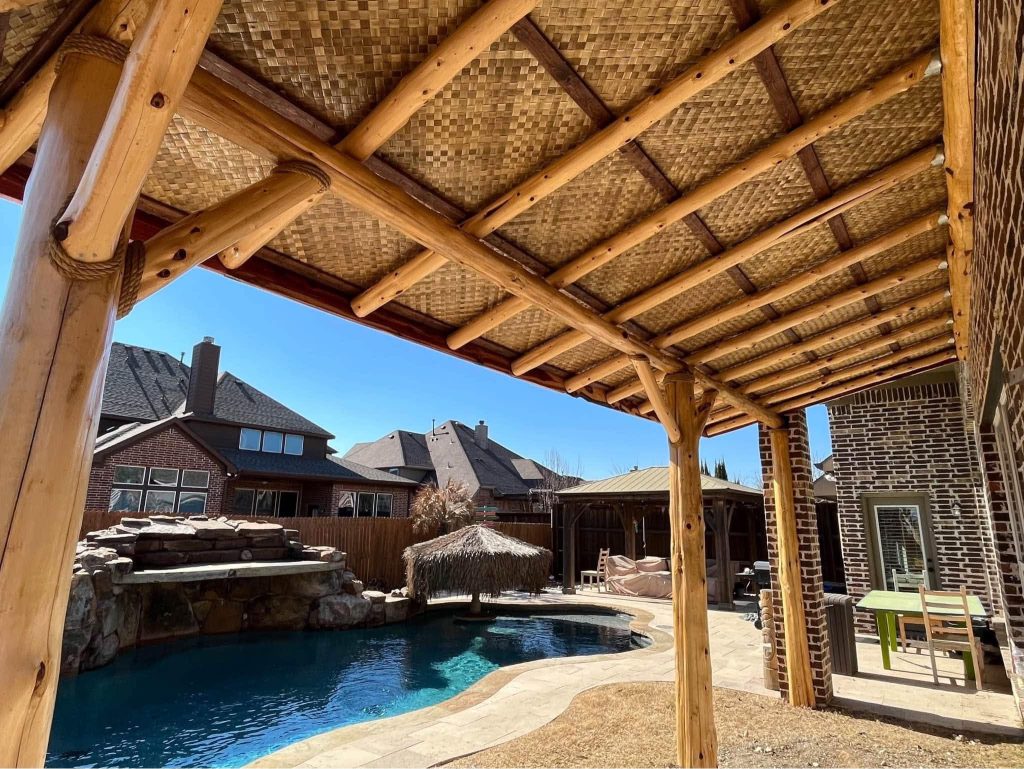
The frame and footings are what keep a tiki bar standing straight through Texas storms. Ask what materials they use for posts and beams, how they anchor the structure, and how they account for wind. A good builder will be happy to explain this in plain terms.
A portfolio you can actually look at
Photos of past work tell you a lot about a builder’s style and attention to detail. Look for clean roof lines, even thatch, and bars that look like they belong in the yard. You can see examples of our work in our portfolio.
Local knowledge
A builder who works in North Texas knows the weather, the soil conditions, and the kinds of questions that tend to come up with cities and HOAs in the area. That local experience can save time and headaches.
Clear communication and a written quote
You should come away from your first conversations understanding what is included, what is not, and what the next steps are. A detailed written quote helps you compare options and avoid surprises later.
Help with the whole picture
The best tiki bars are planned along with the rest of the backyard. A builder who also does palapas, pergolas, and shade structures can help you think about how the tiki bar fits with your pool, patio, and seating areas. Take a look at our services to see the full range of what we build.
Backyard tiki bar design options
Size and layout
Start by thinking about how many people you want to serve and where they will sit or stand. Some common layouts:
- Straight bar. A single counter, simple and space-efficient, good for smaller yards.
- L-shaped bar. More seating and a natural corner for the person serving.
- U-shaped or wraparound bar. Great for big gatherings, with guests on multiple sides.
Tiki bar vs. tiki hut
Some people want a full bar with a counter and stools. Others want a tiki hut for the backyard, which is more of a thatched shelter over a seating or lounge area with no built-in bar. Both use the same thatch look. The right choice depends on whether you picture yourself mixing drinks for a crowd or kicking back in the shade with a book.
Roof shape
Tiki bar roofs can be peaked, round, square, or rectangular. The shape affects the look, how much shade you get, and how water runs off. Your builder should help you match the roof to the size of the bar and the space around it.
Features and finishes
Popular additions include:
- Bar tops in wood or other durable surfaces
- Shelving and storage under the counter
- Space for a mini fridge, ice chest, or sink
- Ceiling fans for summer comfort
- Lighting for evening use
- TV mounts for game days
Plan any features that need power or water early, so wiring and plumbing can be worked into the design instead of added later.
Location in the yard
Many people put the tiki bar near the pool, since it gives swimmers a shady place to grab a drink and a snack. Others tuck it near an outdoor kitchen or at the edge of the yard as a destination. Think about sun angles, how guests will move between spaces, and the view from the bar. For more ideas, check out 7 ways a tiki bar turns your pool into the neighborhood hangout.
Tiki bar or another shade structure?
If you are still deciding between a tiki bar and other kinds of shade, it helps to understand the options. Our post on palapa vs. pergola compares thatch roofs and open-slat designs and can help you figure out what fits your yard best.
Permits and HOA considerations
Rules for backyard structures vary a lot from one city to another and from one neighborhood to another. We cannot tell you what applies to your property, but here are some general questions worth looking into before you build:
- City permits. Some cities require a permit for certain outdoor structures, especially larger ones or those with electrical or plumbing work. Check with your city’s building or permitting office.
- Setbacks. Many areas have rules about how close a structure can be to property lines, easements, or other buildings.
- HOA approval. If you live in an HOA neighborhood, there may be an approval process and guidelines on size, height, materials, or appearance. Get any required approval before work begins.
- Electrical and plumbing. Work on power and water lines may come with its own requirements and may need a licensed professional.
A good tiki bar builder will be familiar with these kinds of questions and can help you understand what information you might need. The final word always comes from your city and your HOA, so check with them directly.
Caring for your tiki bar
Once your tiki bar is built, a little care goes a long way. Keep sprinklers from soaking the thatch, clear off leaves and debris, and take a quick look after big storms. Wipe down and reseal bar tops as needed. For a season-by-season routine, read our guide on palm thatch care through Texas seasons.
Ready to build your backyard tiki bar?
North Texas Palapas designs and builds custom tiki bars, tiki huts, palapas, pergolas, and shade structures across the DFW area. We would be glad to help you plan a backyard tiki bar that fits your space and the way you like to entertain.
Request a free quote or call us at 940-594-8211 to get started.